et_aquifers
Differences
This shows you the differences between two versions of the page.
| Both sides previous revisionPrevious revisionNext revision | Previous revision | ||
| et_aquifers [13/09/2023 13:21] – mike_gss | et_aquifers [13/09/2023 13:36] (current) – mike_gss | ||
|---|---|---|---|
| Line 1: | Line 1: | ||
| ==== Drinking Water and Biostratigraphy (Aquifers) - an example from Denmark ==== | ==== Drinking Water and Biostratigraphy (Aquifers) - an example from Denmark ==== | ||
| - | Miocene fluvio-deltaic sands in Jylland, Denmark (see figs, Rasmussen, 1961 & Weinberg-Rasmussen, | + | {{: |
| - | Ideally, a good reservoir should be coarse grained with high permeability, | + | ---- |
| + | |||
| + | {{: | ||
| + | |||
| + | ---- | ||
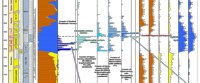
| - | Between 1999 and 2015, an extensive palynological study was carried out on many outcrop sections and boreholes in Jylland | + | Between 1999 and 2015, an extensive palynological study was carried out on many outcrop sections and boreholes in Jylland. Based on the resulting huge database, a new, detailed dinocyst zonation for the Neogene of onshore Denmark was constructed (Dybkjær & Piasecki 2010). See figs below for the dinocyst zonation and representative Miocene palynomorphs. |
| - | Application of the new dinocyst zonation to the boreholes in combination with sequence stratigraphy revealed that earlier well-to-well correlation had to be altered significantly (see fig) and a new, detailed geological model and new lithostratigraphy for the Lower to Middle Miocene succession in Jylland were developed (see fig, Rasmussen et al. 2010). | + | {{: |
| + | |||
| + | ---- | ||
| + | |||
| + | {{: | ||
| + | |||
| + | {{: | ||
| + | |||
| + | ---- | ||
| - | This allows the main drinking water aquifers, the Billund, Bastrup and Odderup Formation sand systems to be accurately correlated. See photo for the fluvio-deltaic deposits of the Addit Member of the Billund Formation. | + | This allows the main drinking water aquifers, the Billund, Bastrup and Odderup Formation sand systems to be accurately correlated. See photo below for the fluvio-deltaic deposits of the Addit Member of the Billund Formation. |
| - | The new geological model also allows correlation of the Billund and Bastrup Formations on seismic sections (see figs). | + | {{: |
| - | The new dinocyst zonation, geological model and lithostratigraphy for the Miocene of onshore Denmark: | + | ---- |
| + | |||
| + | The new geological model also allows correlation of the Billund and Bastrup Formations on seismic sections (see fig below). | ||
| + | |||
| + | {{: | ||
| + | |||
| + | |||
| + | The new dinocyst zonation, | ||
| - have improved the existing stratigraphic framework | - have improved the existing stratigraphic framework | ||
| Line 20: | Line 39: | ||
| - facilitate mapping the extent of known aquifers and clarification of their mutual relationships | - facilitate mapping the extent of known aquifers and clarification of their mutual relationships | ||
| - allow that aquifers are protected from pollution due to leaching from the surface | - allow that aquifers are protected from pollution due to leaching from the surface | ||
| - | |||
| ---- | ---- | ||
| - | |||
et_aquifers.1694611268.txt.gz · Last modified: 13/09/2023 13:21 by mike_gss